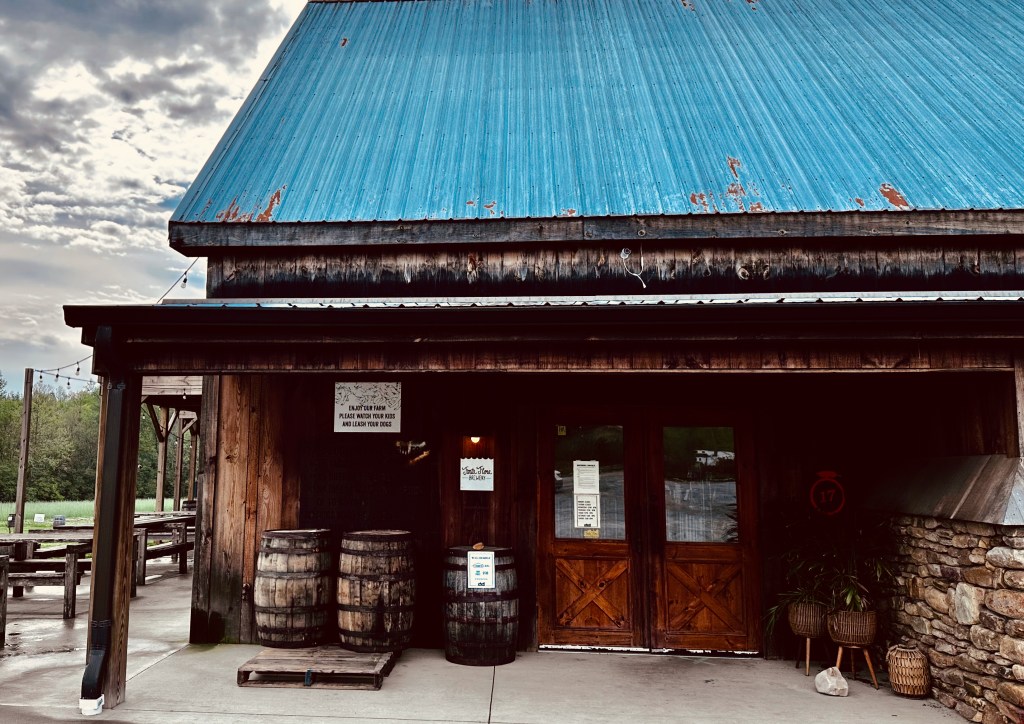
Fonta Flora, the distinctly Appalachian farmhouse brewery, is selecting kegs of beer for a cross country journey. Once in California, they will pour tastes of those unusual beers, telling the story of their brewery, deeply defined by its place in North Carolina. They will also reconnect with friends, maybe even create a beer on the road, in what’s become an incongruously non-local festival tradition.
The draw is the Firestone Walker Invitational Beer Festival, a curated celebration featuring brewers invited by its famed brewmaster, Matt Brynildson. Over the years, while traveling, especially for beer competition judging, Brynildson has tried notable beers, met talented brewers and built a spreadsheet of people he wants to bring to the fest. He prioritizes making sure the brewers can relax, meet peers and enjoy the small town vibe in Paso Robles, a wine growing and cattle hub in California’s Central Coast. Some breweries accept the coveted invitation again and again.
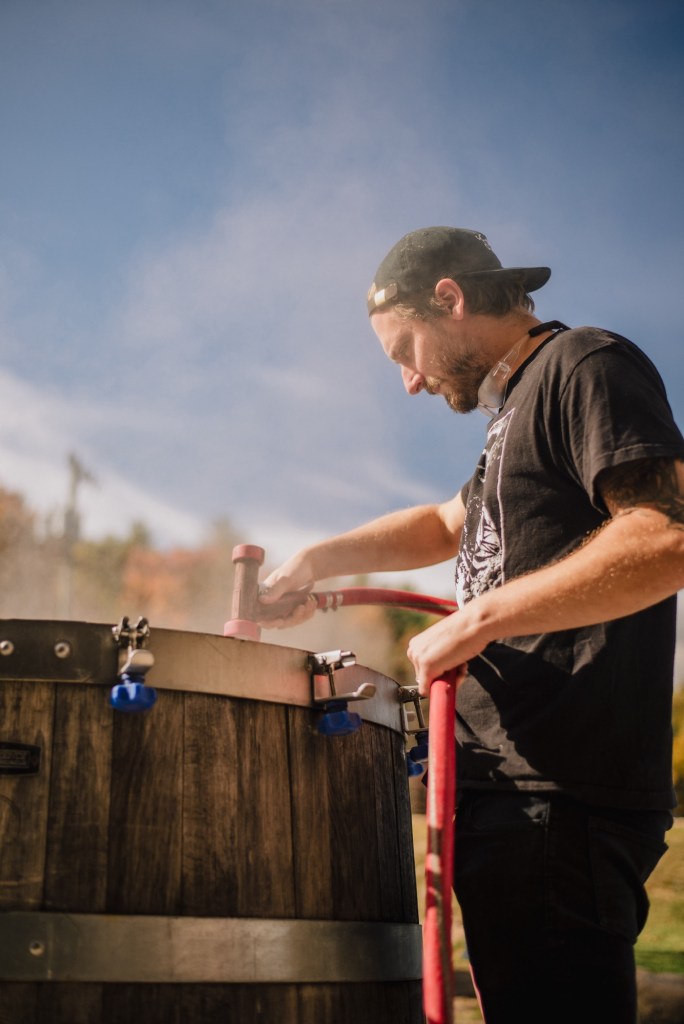
In mid-April, Jeremy Inzer sat down with Steve Shapiro at the Fonta Flora farmhouse brewery in rural Nebo, North Carolina, to talk about the annual festival pilgrimage. Inzer noted that Fonta Flora’s original location is in Morgantown, where co-founder Todd Boera made all the beers at the start. Inzer came aboard seven years ago, bringing the experience to build and run the rural production facility and lead its crew.
(April 19, 2024 — Transcript edited for length and clarity.)
The pull of far away festivals
Shapiro: You are remarkably rooted in this place. But soon you’ll go to the Firestone Walker Invitational Beer Festival [FWIBF]. How many festivals does Fonta Flora travel to?
Inzer: It’s changed a lot through the years. This year, we’ll do about 10 out of state. 2019 was probably our busiest year. Between myself and Todd, it felt like we were on the road every other week.
Shapiro: What other festivals have you traveled out of state for?
Inzer: I know the farthest we’ve gone. It was Todd who went to Mikkeller’s festival in Japan. We used to go to Copenhagen every year, and then that all fell apart. And then, stateside, Firestone’s the furthest away. Later this year, we’re going to be doing Pils and Love, and we’re gonna be going up for Schilling’s Oktoberfest in New Hampshire.
There are many here in the southeastern region, like Yazoo’s Embrace the Funk festival in Nashville. Last week, we did one in Atlanta called the Little Beer Festival.
Shapiro: Are these festivals in places where your beer is in the market?
Inzer: No. Nowadays, we are minimally in 14 different out-of-state markets. It actually started because of the beer festivals. We realized, depending on the state and the rules and everything, sometimes we had to open distribution rights to get the beer there for the festival. We figured, while we’re at it, we could drop a little bit of beer. We started with Lime [Lime Ventures, craft distributors], in California. Now, I would say it’s probably 50/50. The festivals we do are in places that either have our beer available minimally, or not at all.
Shapiro: Why do you do it?
Inzer: Getting our name out there. I don’t think there’s that many people that travel. I used to do it, you know, road tripping to breweries around the country. But there’s still a friend of a friend of a friend kind of thing. Like, if someone tries our beer at FWIBF, and then knows someone who’s in Asheville, they might recommend, “Fonta Flora’s just right down the road.”
We’re so about telling our story, being Appalachian and about our ingredients and all that. That’s why it’s always myself or Todd going out to these festivals, so we can tell the story, trying to not only spread our name as a business, but spreading the ideology: “You can do this right here.”
Firestone Walker does such a good job of curating that event for people. It’s nice, thinking of the regular general admission person, giving them the best experience. Even though a lot of people may know our name, they can’t ever get our beer. So it’s our way of doing a, “here you go!”
“True collaborations” on the road
Shapiro: Do you do any collabs out there?
Inzer: Yeah, we try to hit basically three things. The festival itself, and then, nine times out of 10, we do a collaboration of some sort. And, third, a beer dropped into the marketplace.
I guess the fourth one would be a tap takeover or a beer dinner. We’ll either try to reach out to folks that we already know, or, if we are going through a distributor they might recommend somebody, like Lúpulo [Lúpulo Craft Beer House] in Santa Cruz. Being around for FWIBF has developed that relationship. We’ve done two tap takeovers at their space. We just made a beer specifically for them that we’re sending to California for their anniversary. They all loved our beer Meemaw, so we made them a variation of that. We’ve gotten to know them pretty well. That’s a good example of a non-intentional outcome of going to a festival.
Shapiro: What do you get out of doing collab brews on the road?
Inzer: I think this even goes back to the festival itself: Inspiration.
It’s good to share time – to see not only the actual hands-on process, but the philosophy of these brewers, realizing that these are people just like us, even if in Europe or somewhere else. It’s refreshing to come up with new ideas with other people so far away that might be thinking the exact same way we are.
In this Firestone collaboration, remember that we’ve been doing this one for a few years. We use heritage Carolina Gold rice that is local to only right here. That was something Matt [Brynildson] really got excited about. It’s a mix of our world, using heritage grains, and their world of new, unique hops.
Aside from the technical side of things, there’s “what is our brand and what is your brand”? How can they come together and make a true collaboration? Because I’ve seen so many other brewers nowadays that just do “let’s both put our name on the bottle.” We try to do everything very deliberately, to make a true collaboration. We’ve gone as far as having our artists working with their artists.

Selecting the festival tap list
Shapiro: What beers will you bring out for FWIBF?
Inzer: We’re bringing seven beers this year. We’re trying to bring things that are unique to us. We love making pilsners, and make a ton of them, but we don’t want to bring another pilsner. So our crushable beer that we’re bringing is a Grodziskie. We do the Grodziskie maybe once a year, but the timing changes. We figured it’d be a great beer for FWIBF, so we lined it up to be released for the fest.
We’ve been brewing this one for five years. It’s a collaboration with Live Oak, down in Texas. I used to work there a long time ago. For their Grodziskie, they got a Polish yeast strain that nobody else had banked, and isolated it to make that beer. I don’t know how many of the general public people at FWIBF will know about Grodziskie, a Polish smoked wheat beer. But we use our pecan smoked wheat, which is obviously not Polish traditional, but it’s Appalachian traditional. Again, that’s a great example of a collaboration, with Live Oak’s proprietary Yeast strain and our local smoked malt.
We’ll bring some hoppy beers. And then we’ll have a few of our Appalachian wild ales, because that’s what people still know us for the most. This is our second year releasing a spontaneous beer.
Shapiro: I see you have a three year blend, inspired by a gueuze?
Inzer: Yeah, we’ll send some of those, which we’ve never brought before. We’re excited about that. And then, we’ve been doing more in the last three or four years on the clean barrel-aged side of things. So we’ll bring a bourbon barrel aged stout and a barleywine.
Shapiro: That’s a wide variety. I think of you more as Appalachian, wild, foraged…
Inzer: The reason everybody knows us in that way is because that’s what we brought to all of the festivals. Anybody who knows us not from here, that’s the first thing they think. If we’re going to a high profile festival, like FWIBF, we bring some of those beers because we all know that that’s what the people in the crowd are probably looking for from us. Even back to that Firestone Walker collab with the heritage rice, for the clean beers we make, we like to throw local ingredients in.
They’re all special releases. Because we love Firestone so much and know so many people there do, too, we’re just trying to give them the best of the best.
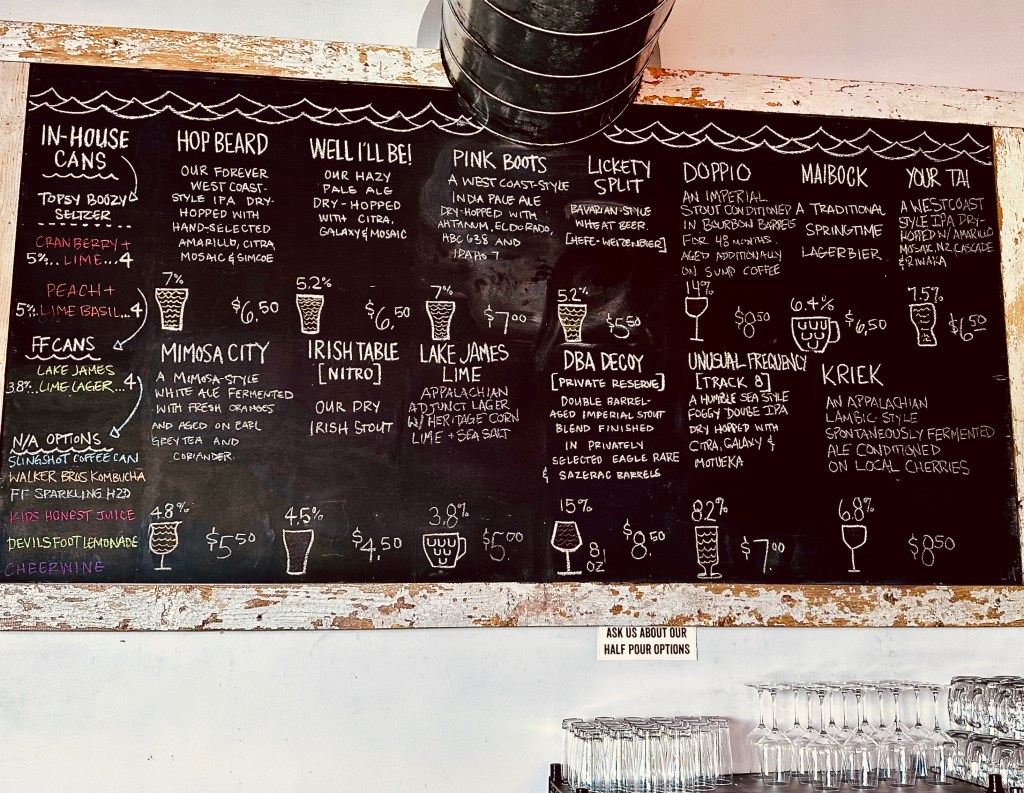
Like our double barrel-aged Decoy is the bourbon barrel aged stout that we’re sending. For us, on Untappd, or whatever you look at, it’s our highest rated beer… Gotta give the people what they want!
Anyway, back to your collaboration questions, we alternate between flying into San Francisco and LA for the festival and then drive. So last year we did San Francisco and this year we’re going to do LA. In terms of LA, we’ve collaborated with Monkish before, Green Cheek. Highland Park.
We’ll see. We’re starting those conversations now. Last year in Santa Cruz we brewed with Humble Sea. This was back to a true collaboration. We flew in, and checked a 50 pound bag of our heritage corn to brew with.
Shapiro: 50 pounds went into your recipe, because that’s the checked bag limit! That’s funny.
Inzer: Yeah! This year, the Lúpulo anniversary is right around that time. We’re going to ship the beer that we made for them out through Lime. We’ll try to pour at a handful of events while we’re on the road.
Better beers by being there
Shapiro: Give me a concrete example of something you learned through a collaboration?
Inzer: Up until three years ago, Todd and I were both very anti-hazy-IPA, we never made a single one. And then we finally got to the point where everybody was asking. We thought, we’re doing ourselves a disservice. Our first one we ever did was with The Veil. They had been talking to us about doing one together and it just became a joke, for years. We finally took some advice from them.
Again, with Humble Sea, we made a hazy IPA that just came out this week. We call it a Humble Sea style hazy IPA. From the technical side of things, we ask how you would make the beer: we’re going to use our local grains and our brew house and everything, but we want to know how you would make it. Thinking across the many IPA specific collaborations we’ve done, it’s really interesting to see how differently people do things, yet the end result sometimes comes out very similar.
Shapiro: Some of that you can do by phone, right? What’s the benefit of traveling thousands of miles to physically be there?
Inzer: Seeing people! And related to that is seeing people’s equipment. How they do things can be eye opening.
When we’re back here, it’s just human nature, we’re getting into a groove. We have a way of doing things, and we’re happy with it.
But at Humble Sea, they have their way to dry hop under pressure, which we haven’t been able to do because we just don’t have the equipment. We saw the process when we were out there and then we recently talked to them about how we’d do it here.
Years ago, up at Trillium, I remember seeing their dry hop slurry in action. You can read about techniques in The New Brewer or whatever else, but it’s different seeing how it’s implemented.
Frankly, since we’re still a small brewery, some things don’t make sense for us. Buying a centrifuge doesn’t really make sense for us. So it’s about how people can do things efficiently, making beer taste great and working within our breweries’ sizes. Seeing it in person just helps.

Note: This year, Jeremy Inzer will stay grounded in North Carolina while co-founder Todd Boera brings Fonta Flora back to California. The Firestone Walker Invitational Beer Festival is sold out for 2024.
Beer Currents’ Steve Shapiro (Interviewer) and Gail Ann Williams (Editor of this story) are beer writers whose work may be found on various beer sites including their own SF Bay Area-centric BeerByBART.com They indeed still travel for beer and beer people.
 Beer Currents